
Cursive Writing Practice for Kids - Why It Is Still Important in 2026
In today’s digital world, where smartphones, tablets, and computers have become a regular part of life, many parents wonder if handwriting skills are still necessary. A lot of people believe that learning to type is enough for children. However, the truth is that cursive writing continues to play an important role in a child’s overall development.
Cursive writing is not just an old-fashioned skill. It helps improve a child’s brain development, concentration, memory, and creativity. In this article, we will discuss in detail why cursive writing is still important, its benefits, the right age to start, and the best way to practice it.
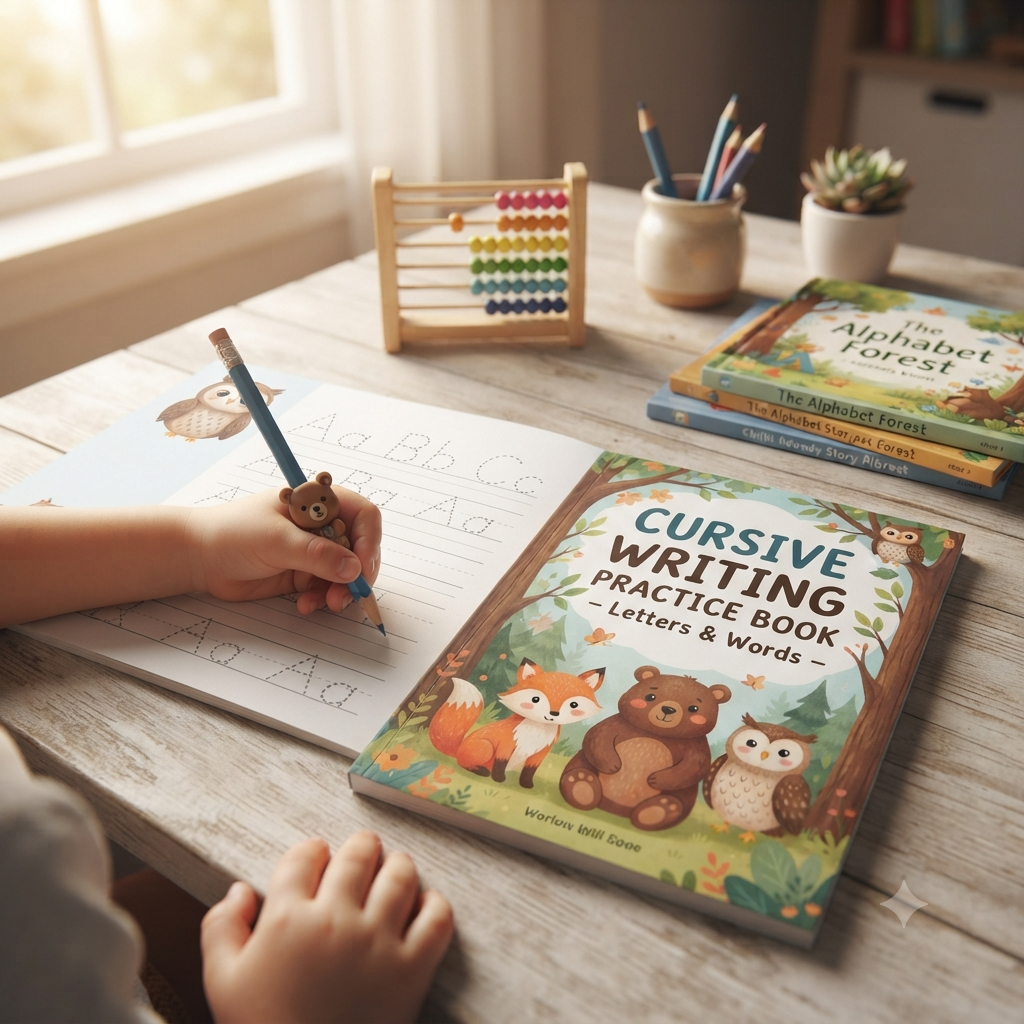
What is Cursive Writing?
Cursive writing is a style of writing in which the letters are joined together in a flowing manner. Unlike print writing, where each letter is written separately, cursive writing allows the pen to move continuously from one letter to another. This creates a smooth and connected writing style.
In earlier times, cursive writing was a compulsory part of school education. Over the years, its practice reduced in many schools. However, parents and teachers are once again realizing its importance in a child’s learning journey.
Benefits of Cursive Writing
1. Improves Brain Development Research shows that cursive writing activates both the left and right sides of the brain. This helps improve learning ability, memory, and problem-solving skills. When a child forms continuous strokes with a pen, it strengthens important brain connections.
2. Makes Handwriting Neat and Clear Regular cursive writing practice helps children develop neat, clean, and presentable handwriting. Many children struggle with messy handwriting simply because they do not get proper guided practice.
3. Increases Writing Speed Since the letters in cursive are connected, there is less need to lift the pen again and again. This naturally improves writing speed, which can be helpful during exams and note-taking.
4. Improves Focus and Concentration Cursive writing is a mindful activity. When children carefully form each letter, their focus and concentration improve. This is especially helpful for children who get distracted easily.
5. Develops Fine Motor Skills Practicing cursive writing improves pencil grip, hand control, and hand-eye coordination. These skills are also useful in drawing, crafts, and other creative activities.
6. Strengthens Memory When children practice cursive letters, they need to remember the shape and flow of each letter. This helps strengthen their visual memory and learning capacity.
7. Builds Confidence Children with neat handwriting often feel more confident in school. Good handwriting creates a positive impression on teachers and also boosts the child’s self-esteem.
When Should Children Start Cursive Writing?
According to most experts:
- Children can start learning cursive writing between the ages of 5 to 7 years.
- Before starting cursive, children should be comfortable holding a pencil and writing basic print letters.
- Once they are familiar with print letters, cursive writing can be introduced gradually.
Some children may be ready a little earlier, but it is important not to put pressure on them. Learning should always remain enjoyable.
How to Practice Cursive Writing Step by Step
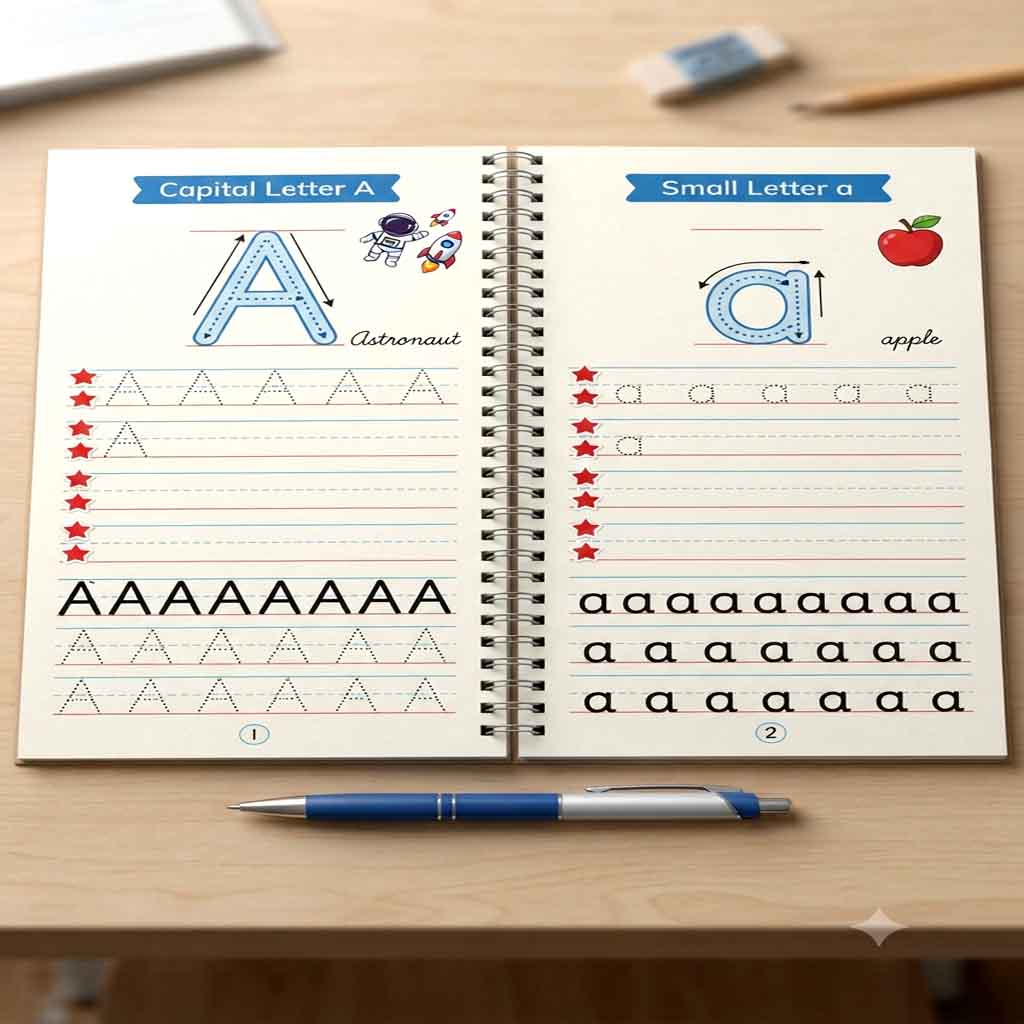
Step 1: Start with Capital Letters Begin with Capital Letters (A to Z). These are easier to recognize and practice in the beginning.
Step 2: Practice Small Letters After capital letters, move on to Small Letters (a to z). Small letters require more flow and control.
Step 3: Write Simple Words Once the letters are clear, start practicing simple words such as cat, dog, pen, book, and sun.
Step 4: Practice Short Sentences Finally, move on to short sentences. This helps improve writing flow and speed.
Step 5: Practice Daily Just 15 to 20 minutes of daily practice is enough. Long practice sessions can make children bored or tired.
Common Mistakes Parents Should Avoid
- Expecting quick results
- Putting too much pressure on the child
- Allowing incorrect pencil grip or posture
- Practicing without proper guidelines
- Depending only on school practice
Avoiding these mistakes can make the learning process smoother and more effective.
What Should a Good Cursive Writing Practice Book Include?
A well-designed cursive writing practice book should contain:
- Clear and bold writing guidelines
- Separate pages for Capital Letters (A-Z)
- Separate pages for Small Letters (a-z)
- Dotted letters for tracing practice
- Space for independent writing
- Simple words and sentences
- Age-appropriate and clean design
A structured book makes it much easier for children to learn cursive writing at home.
Why Cursive Writing Is Still Important in the Digital Age
Many people believe that handwriting is no longer necessary because everything is becoming digital. However, the reality is different:
- Most school exams are still handwritten
- Good handwriting helps in faster note-taking
- Writing by hand improves creative thinking
- It also helps reduce excessive screen time
This is why cursive writing practice remains relevant even in 2026.
Helpful Tips for Parents
- Make practice fun instead of stressful
- Set aside a small amount of time daily
- Appreciate your child’s progress
- Teach the correct pencil grip
- Ensure proper sitting posture while writing
Small daily efforts can bring excellent results over time.
Conclusion
Cursive writing is more than just a writing style. It supports a child’s academic growth, brain development, focus, and confidence. Even in today’s digital world, this skill continues to hold great value.
If you want your child to learn cursive writing easily at home, a structured Cursive Writing Practice Book is one of the best tools. An 80-page book that covers both capital and small letters can provide complete practice support.
Disclosure
- Start with small steps today and help your child develop beautiful and confident handwriting.
- As an Amazon Associate, I earn from qualifying purchases.
- Shop Now our collection of Digital Product Service.
Frequently Asked Questions (FAQs)
1. What is the best age to start cursive writing for kids?
Most children can start learning cursive writing between 5 to 7 years of age. It is better to begin after they are comfortable with basic print letters.
2. Is cursive writing still important in 2026?
Yes, cursive writing is still important. It helps improve brain development, handwriting, focus, memory, and writing speed. Even in the digital age, it remains a useful skill.
3. How much time should a child practice cursive writing daily?
15 to 20 minutes of daily practice is enough. Short and regular practice is more effective than long sessions.
4. Should children learn capital letters or small letters first in cursive?
It is better to start with capital letters first, as they are easier to understand. After that, children can practice small letters.
5. Can cursive writing improve concentration?
Yes, cursive writing is a mindful activity. It helps children focus better and improves their concentration over time.
6. Is a cursive writing practice book helpful for beginners?
Yes, a structured cursive writing practice book is very helpful for beginners. It provides step-by-step guidance, tracing pages, and enough practice space.
7. How can parents help children learn cursive writing at home?
Parents can help by giving daily practice time, using a good practice book, teaching the correct pencil grip, and encouraging the child without pressure.
8. Does cursive writing help in exams?
Yes, children who practice cursive writing often develop faster and clearer handwriting, which can be helpful during exams.